How Sustainable Packaging Protects the Natural World
Every year on 3 March, the United Nations celebrates World Wildlife Day, a moment to reflect on the intrinsic value of wild animals and plants, […]
On 21 and 22 October 2025, ILSI Europe organised a high-level expert workshop exploring the safety assessment of recycled polyolefins (PO) and polystyrene (PS) for future food-contact applications.
Although PET is currently the only recycled plastic authorised for food contact in the EU, the Packaging and Packaging Waste Regulation (PPWR) will soon require 10–35% minimum recycled content in plastic food packaging by 2030, making it urgent to expand safe recycling beyond PET.
Over two sessions, international experts from academia, industry, regulatory bodies, and research institutes reviewed the challenges and opportunities in setting evaluation criteria for the safe recycling of PO and PS, aligned with EFSA expectations.
Key Messages
The urgency of clear evaluation criteria
Importance of understanding the feedstock
Why polyolefins are challenging
About polystyrene (PS)
Why this matters for E-OilÉ
Although E-OilÉ focuses on biodegradable and bio-based materials, innovations in packaging must coexist with evolving regulatory frameworks for fossil-based plastics.
Understanding safety criteria for recycled plastics helps E-OilÉ stay aligned with EU packaging legislation, anticipate market transitions, and ensure that the project’s biodegradable alternatives integrate smoothly into future circular systems.
More information: https://eoileproject.eu/event/recycling-of-novel-non-pet-plastics/
Last Updated 23/02/2026
Explore more news and updates on our journey towards sustainable, biodegradable packaging solutions.
Every year on 3 March, the United Nations celebrates World Wildlife Day, a moment to reflect on the intrinsic value of wild animals and plants, […]
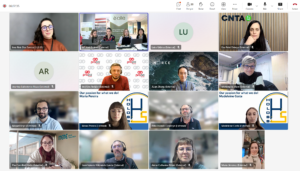
The E-OilÉ consortium gathered for its first General Assembly on 10 December 2025, bringing together representatives from all 15 partner organisations across Europe. Held online, […]
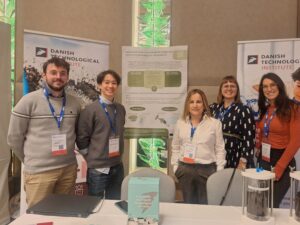
E-OilÉ was present and represented at the European Bioplastics Conference 2025, the leading event for innovation, business, and policy in the bioplastics sector, held in […]
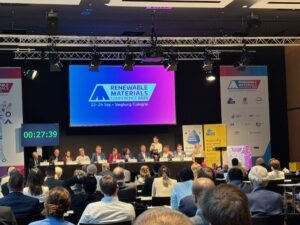
Siegburg, Germany | 22–24 September 2025 The E-OilÉ project participated in the Renewable Materials Conference 2025 (RMC25), held in Siegburg, Germany. This conference is one […]